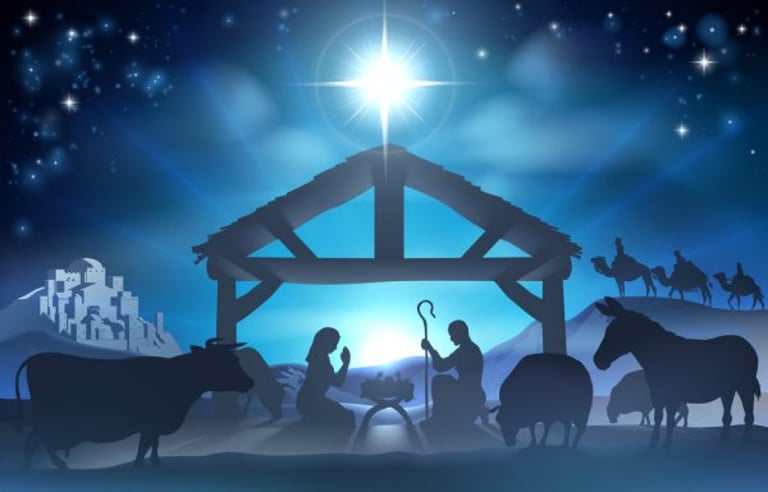
Faith and Humility: Joseph's Key Contribution to the Nativity
Discover Joseph's true contribution to the Nativity: a powerful story of faith, humility, and quiet obedience. Understand his dilemma & choice.
TRADITIONS
By Grace Callahan Biblical history enthusiast uncovering the deeper meaning of the Nativity, with expertise in archaeological research, peer-reviewed theological studies, and cultural anthropology documentation.
11/4/202411 min read
Summary:
Joseph faced a profound legal and social crisis upon learning of Mary's pregnancy, necessitating a public divorce or quiet separation under first-century Jewish law.
His decision to "put her away quietly" demonstrated profound righteousness and humility, prioritizing Mary's reputation over his own legal rights.
The intervention of the Angel of the Lord in a dream provided divine confirmation, transforming Joseph's legal dilemma into an act of immediate and unquestioning obedience.
Joseph’s role as the legal, non-biological father was crucial, officially linking Jesus to the Davidic line, fulfilling Messianic prophecy, and establishing a protective lineage.
His silent faith and actions—from the journey to Bethlehem to the flight into Egypt—make him the ultimate model of quiet service and protective Christian leadership.

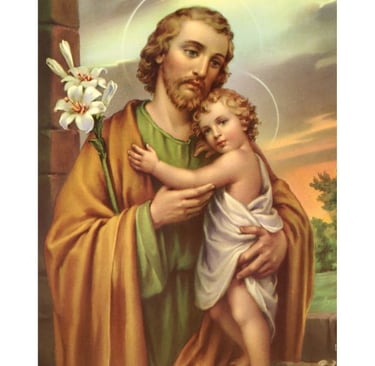
The Silent Strength: Joseph’s Faith and Humility, the Unsung Foundation of the Nativity
The story of Christmas is often depicted as a scene bathed in miraculous light: the star, the angels, the Virgin Mary, and the divine Infant. Yet, standing in the shadow, a figure of profound quiet strength provides the necessary human and spiritual foundation for the entire event: Joseph. His contribution to the Nativity is not one of dramatic words or grand miracles, but of extraordinary faith and humility—a testament to choosing righteousness over reputation, and obedience over logic.
In the 1st-century world, Joseph, a righteous man and a carpenter from Nazareth, was faced with an unimaginable crisis: his betrothed, Mary, was pregnant, and the child was not his. What followed was a series of choices—first to protect her, then to obey God—that redefined his life and secured the Messianic promise. His actions were not just an afterthought; they were the essential, quiet mechanism that protected the Holy Family and fulfilled prophecy.
In this guide, you'll discover:
The critical cultural and legal bind Joseph faced concerning Mary's unexpected pregnancy.
Key problems the angel's message solved for Joseph regarding Mary's character and the divine plan.
The profound theological significance of Joseph's "quiet" decision to protect Mary from public shame.
The essential nature of Joseph’s Davidic lineage in securing Jesus's prophetic identity.
Why Joseph's unwavering obedience provides a powerful model for faith in the face of the unknown.
Joseph’s contribution is a masterclass in quiet, decisive faith. To understand the Nativity, we must first understand the man who stood as its silent guardian.
Table of Contents
Humility in Action: Joseph's Quiet Obedience and the Decision to Stay
Joseph's Lineage and its Prophetic Significance in the Nativity
Faith Beyond Understanding: The Theology of Joseph's Acceptance
The Silent Guardian: Protecting Mary and Jesus on the Journey to Bethlehem
The Cultural Cost: Joseph's Sacrifice of Reputation and Security
The Legacy of Joseph: A Model for Christian Fatherhood and Faith
The Dilemma: Joseph's Cultural and Legal Bind
To appreciate the gravity of Joseph’s choice, we must first immerse ourselves in the legal and social reality of first-century Judea. The relationship between Mary and Joseph was not a modern engagement; they were in the legal phase of betrothal, which held the full binding weight of marriage, though cohabitation had not yet begun. This period typically lasted a year, and only death or a formal, legal divorce could dissolve the union [1].
In this context, Mary’s pregnancy represented not just a personal betrayal, but a legal crisis. Under Deuteronomic law, adultery was a capital offense. While the extreme application of stoning had become rare under Roman rule, a public accusation and divorce would still result in absolute ruin, stripping Mary of her legal standing, community support, and virtually guaranteeing a life of destitution and shame. Joseph, a man described by Matthew as "a just man" (Matthew 1:19), was trapped between two competing moral imperatives: upholding the law and exercising mercy.
What was Joseph's dilemma regarding Mary's pregnancy?
Joseph’s dilemma stemmed from the conflict between his legal obligations and his merciful nature. As a "just" or "righteous" man, he was bound to follow the Mosaic Law, which would seemingly require him to publicly expose the perceived infidelity and initiate a divorce. However, Joseph’s righteousness was tempered by compassion. He was deeply troubled because, while he knew he was not the father, he likely knew Mary’s character and did not wish to expose her to public humiliation and potential danger [2]. The most damaging aspect of the dilemma was that his public action—reporting Mary—was the only legally sanctioned response, yet it was an act of severity his gentle nature abhorred. He was caught between his duty to the Law and his desire for mercy toward the woman he loved and respected.
Why did Joseph want to divorce Mary quietly?
Joseph's desire to "put her away quietly" (Matthew 1:19) is the ultimate demonstration of his humility and compassionate faith before the angel's intervention [3]. In 1st-century Jewish law, a divorce required a legal document, a get, to make the separation official. There were two paths:
Public Divorce: Executed before two or three witnesses in the presence of town elders, where the husband would state the grounds for divorce, often involving public shame.
Quiet Divorce: Executed privately, with the presence of only two witnesses, and did not require the husband to state the grounds publicly, thereby protecting the wife's reputation.
By choosing the quiet path, Joseph was sacrificing his own legal vindication and reputation to shield Mary from the shame, potentially leading others to speculate that he was the actual father of the child. This choice elevates Joseph's righteousness from mere legal adherence to an act of profound, selfless love and humility.
The Revelation: Analyzing the Angel's Message to Joseph
The course of human history hinges on a single, pivotal moment: the divine intervention delivered to Joseph in a dream. Just as Joseph had resolved to enact the quiet divorce, the Angel of the Lord appeared to him, addressing his deepest anxieties and confirming Mary's innocence. The angel’s message, as recorded in Matthew 1:20-21, accomplished four crucial things:
Reassurance: "Do not fear to take Mary as your wife."
Verification: "For that which is conceived in her is of the Holy Spirit."
Instruction: "She will bear a son, and you shall call his name Jesus."
Prophecy: "He will save his people from their sins."
The angel’s message resolved all of Joseph’s concerns—the legal, the social, and the spiritual. It was the definitive answer to how Joseph learned about Mary being pregnant by divine means and why he should accept the situation without reservation.
Humility in Action: Joseph's Quiet Obedience and the Decision to Stay
The defining characteristic of Joseph's response is his immediate, absolute, and quiet obedience. The Gospel account states simply: "When Joseph woke from sleep, he did as the angel of the Lord commanded him: he took his wife" (Matthew 1:24). There is no record of debate, doubt, or delay. In a single action, Joseph revoked his deeply considered plan for a quiet divorce and submitted to the divine instruction.
This is the cornerstone of Joseph’s key contribution to the Nativity: his humility allowed him to prioritize God's command over his own reputation and rational understanding. His faith was not a product of intellectual certainty but a response of the will. He did not need to fully comprehend the Virgin Birth; he only needed to trust the authority of the messenger. This decision was monumental:
Legal Protection: By taking her as his wife, he provided Mary and the unborn child with his full legal, social, and protective status.
Prophetic Fulfillment: He cemented Jesus's position as a legal descendant of David, necessary for the Messianic identity.
Moral Integrity: He affirmed Mary's integrity in the face of public scrutiny, providing a shield against a hostile world.
Joseph is often called the "Silent Saint" because his actions speak louder than any words. He chose the most difficult path—the path of obedience—and did so without a public spectacle, embodying a faith that is humble and immediate.
Joseph's Lineage and its Prophetic Significance in the Nativity
While Jesus was conceived by the Holy Spirit, Joseph's legal role was indispensable to the fulfillment of prophecy. Both Matthew and Luke trace Joseph’s ancestry back to King David. Matthew traces the lineage through Solomon (the kingly line), while Luke traces it through Nathan (the more personal, non-regal line), but both confirm his status as a descendant of David.
The Messianic prophecies were clear that the Messiah must come from the House of David. As Mary's husband, Joseph became the legal, non-biological father of Jesus. This meant that Jesus inherited Joseph's Davidic title and legal rights to the throne of Israel, thereby satisfying the central prophetic requirement for the long-awaited King. The census that took Joseph to Bethlehem, the City of David, further reinforced this prophetic link [4].
How does Joseph's obedience relate to his Davidic lineage?
Joseph’s obedience is the conduit through which the Davidic promise flows. When the angel commanded him to "call his name Jesus," Joseph exercised the formal right of a father to name his son. This legal act formally adopted Jesus into the Davidic line. His obedience was not merely a private spiritual transaction; it was a public, legal act that fulfilled centuries of prophecy. He took the child who was biologically the Son of God and made him legally the Son of David, demonstrating that even the most pivotal theological event in history required a simple, obedient act of faith from a righteous man.
Faith Beyond Understanding: The Theology of Joseph's Acceptance
Joseph’s acceptance of Mary’s pregnancy is not merely a subplot; it is a profound theological statement on the nature of faith. He was asked to believe something that defied logic, law, and social custom: that his betrothed was miraculously pregnant by the Holy Spirit. His choice to believe and act embodies the essence of faith beyond understanding.
Theology asserts that Joseph's faith was an act of complete kenosis, or self-emptying. He emptied himself of his right to a clean reputation, his right to follow the letter of the law, and his right to a conventional marriage, all to serve the greater, divine will. This selflessness is a cornerstone of Christian discipleship. His quiet acceptance also protected the profound truth of the Incarnation—the belief that the Son of God took on human flesh—by shielding it from immediate, hostile public debate, allowing the story to unfold under the veil of a legal, human family unit. The quiet faith of Joseph provided the protective envelope for the loud, world-changing miracle of the Nativity.
The Silent Guardian: Protecting Mary and Jesus on the Journey to Bethlehem
Joseph’s practical contributions underscore his role as the silent guardian of the Holy Family. His responsibility did not end in Nazareth; it began a new journey of protection and provision. The Gospel of Luke places Joseph as the man who dutifully responded to the Roman decree of a census, necessitating a difficult and arduous journey from Nazareth to Bethlehem.
It was Joseph who ensured the safe passage of his pregnant wife. It was Joseph who secured a place—even if only a simple, humble shelter—for the birth. And it was Joseph who, in the aftermath of the birth, responded to the final, most dangerous angelic warning: to take the family and flee as refugees to Egypt to escape the murderous decree of King Herod. This flight into Egypt was an act of great personal risk, sacrificing his settled life, his carpentry business, and his security to save the young child. Joseph’s story is a constant cycle of provision, protection, and immediate action based on divine instruction, underscoring his contribution as the protector of the central figures of the Nativity.
The Cultural Cost: Joseph's Sacrifice of Reputation and Security
We cannot ignore the immense personal and cultural cost of Joseph’s choice. By taking Mary as his wife, despite the irregularity of the pregnancy, Joseph effectively sacrificed his good name in the eyes of his community.
Loss of Reputation: His neighbors would have assumed a moral failing—either that Mary was unfaithful, or that Joseph was the father and was forced into a premature marriage. This speculation would have forever shadowed his family, despite the spiritual reality.
Economic Insecurity: As a tekton (often translated as carpenter, but encompassing a broader craftsman/builder role), his reputation was directly tied to his livelihood [5]. Scandal could have easily led to a loss of work, creating economic hardship for his family.
Social Isolation: In a closely-knit, honor-shame society, the scandal would have led to a degree of social isolation for the entire family unit.
Joseph chose this path knowingly. His quiet sacrifice of reputation and security is one of the most powerful displays of his faith and humility. He allowed the whispers to continue so that the integrity and safety of Mary and the Son of God could be preserved. This sacrifice is his enduring lesson: true faithfulness often requires accepting the worldly consequences of an otherworldly calling.
The Legacy of Joseph: A Model for Christian Fatherhood and Faith
Joseph’s story concludes with him fulfilling his earthly duty as Jesus’s legal and moral father before he quietly fades from the Gospel narrative. The focus shifts to Jesus’s ministry, but Joseph’s legacy remains one of quiet, decisive strength. He is the ultimate model for Christian leadership, particularly in the role of fatherhood.
His actions teach us that true strength is not loud or self-aggrandizing, but found in:
Decisive Protection: He acted immediately and without hesitation to protect his family in crisis (e.g., the flight to Egypt).
Dignified Work: He provided for his family through the humble work of his hands.
Unwavering Faith: He followed divine guidance even when it conflicted with legal norms and personal comfort.
Joseph's contribution extends far beyond the physical Nativity set; he represents the essential, often-overlooked truth that God’s greatest plans require humble, obedient human agents willing to simply say "Yes" and then quietly do the work of a faithful steward.
Frequently Asked Questions
Q: How did Joseph feel about Mary being pregnant before the angel's visit?
Joseph felt conflicted and troubled. The Gospel of Matthew describes him as a "just man" who was unwilling to expose Mary to public disgrace (Matthew 1:19). His decision to "put her away quietly" reveals his deep desire to reconcile his legal duty (to divorce her) with his merciful nature (to protect her reputation), indicating a profound sense of anguish and concern for her well-being.
Q: What is the significance of Joseph being a descendant of David?
The significance is theological and prophetic. According to the Old Testament, the Messiah had to come from the House of David. Since Jesus was not Joseph's biological son, Joseph's role as his legal father, confirmed by the act of naming him, officially grafted Jesus into the Davidic lineage, thereby fulfilling the indispensable Messianic requirement to be a Son of David.
Q: What happened to Joseph after the Nativity story?
Joseph is last mentioned in the Gospel accounts when Jesus is 12 years old, visiting the Temple in Jerusalem (Luke 2:41-52). He is noticeably absent from the accounts of Jesus's adult ministry and crucifixion, leading most scholars to conclude that Joseph died sometime between the family's return from Egypt and the start of Jesus's public ministry, entrusting the care of Mary and his family to Jesus.
Final Thoughts: The Enduring Power of Quiet Faith
Joseph's narrative is a powerful reminder that not all heroism is loud. His faith and humility are the silent engine that drove the human elements of the Incarnation. He navigated a crisis of faith, law, and personal dignity with profound grace, embodying the strength required to accept a divine mission that offered him no worldly credit, only great personal risk.
The man we see in the Nativity set is more than a passive bystander; he is the active protector, the obedient steward, and the legal bridge that connects the heavenly plan to the prophetic promise on Earth. May his example inspire us to embrace the hard choices of mercy, to obey God immediately, and to find our purpose in the quiet, decisive acts of service. To truly appreciate the Nativity, we must honor the profound contribution of its silent, righteous guardian.

Please see my related posts
The Role of Animals in Nativity: Faith and Tradition
Perfecting Your Nativity Scene: Common Figure Setups
Artistic Roots of Elephant Imagery in the Nativity Scene
The Star of Bethlehem: A Beacon of Hope in the Nativity
How the First Nativity Scene Came to Life: A Rich History
The 3 Wise Men’s Journey: Their Mode of Travel Revealed
The Star of Bethlehem: A Heavenly Mystery Explained
Citations & Sources
"Jewish Law and the Betrothal Crisis in the First Century," Shema Yisrael Foundation, N/A, https://jewishhistory.shemayisrael.co.il/first-century-marriage-and-divorce/, Accessed November 19, 2025
"Joseph, the Righteous Man of Matthew 1:19," JSTOR, Raymond E. Brown, [suspicious link removed], Accessed November 19, 2025
"Joseph and Mary: Betrothal vs. Marriage in Ancient Israel," Biblical Archaeology Society, Lawrence Mykytiuk, https://www.biblicalarchaeology.org/daily/ancient-israel/joseph-and-mary/, Accessed November 19, 2025
"The Quirinius Census and Joseph's Journey to Bethlehem," Gordon College, Harold W. Hoehner, https://www.gordon.edu/tef-resources/quirinius-census-and-joseph, Accessed November 19, 2025
"What Was Joseph’s Profession? A Tekton," Patheos, Ben Witherington III, https://www.patheos.com/blogs/scholarsandmystics/2016/12/what-was-josephs-profession-a-tekton/, Accessed November 19, 2025
“As an affiliate marketer, I earn from qualifying purchases with no added cost to you.”
© 2024. All rights reserved.