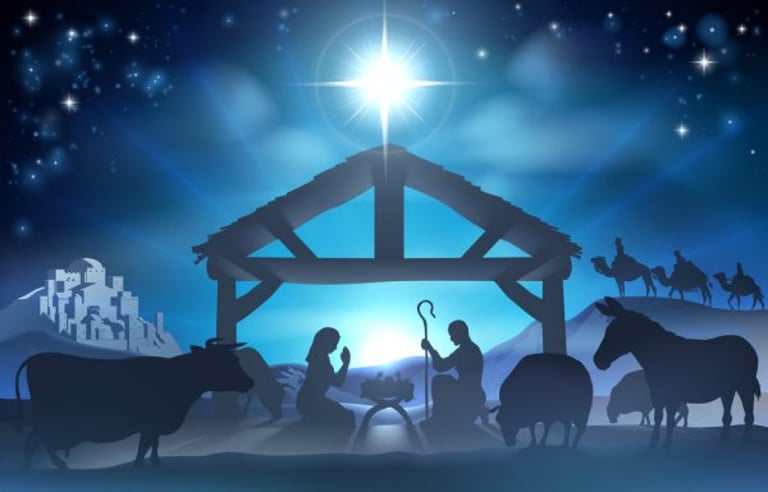
How to Add Wise Men to an Existing Nativity Scene
Learn how to add Wise Men to an existing Nativity by matching figure scale, style and materials and choosing Three Kings, camels and other additions.
Grace Callahan
10/7/202611 min read


Maybe you already have Mary, Joseph and Baby Jesus. Perhaps your Nativity also includes shepherds, sheep or an angel.
But there are no Wise Men.
You don't necessarily need to replace the Nativity or buy another complete set.
Three Kings figures are sold separately in many sizes and styles, and some Nativity collections are specifically designed to let you add figures over time. The challenge is finding Wise Men that look as though they belong with the scene you already own.
Height is part of that decision, but it isn't the only part. Scale, body proportions, material, sculpting style and even the way the figures are posed can determine whether the new Magi look like a natural expansion of the Nativity or three unrelated decorations placed beside it.
You also have another choice: the Wise Men don't necessarily have to arrive alone. Camels, elephants, horses and other figures can begin turning a simple manger scene into a much larger depiction of the journey to Bethlehem.
Here's how to decide what will work with the Nativity you already have.
Table of Contents
Can You Add Different Wise Men to an Existing Nativity?
In many cases, yes.
You don't need figures made by the original manufacturer as long as the new pieces work visually with the existing Nativity.
That gives you considerably more flexibility than searching only for an exact matching accessory set.
Start by looking at the Nativity you already own.
Are the figures realistic or stylized?
Are they painted in rich colors or intentionally simple?
Are they resin, porcelain, wood or another material?
Do the figures have slender proportions, or are they broader and more compact?
A set of beautifully detailed Wise Men can still look wrong if its proportions and artistic style are completely different from Mary and Joseph.
The goal isn't necessarily to create a factory-matched set. It is to make the expanded scene look intentional.
That distinction opens many more possibilities.
Measure Your Existing Nativity Before Buying the Wise Men
One of the easiest mistakes is assuming that two figures described with similar height measurements will automatically belong together.
Before shopping, measure several figures in the Nativity you already own.
Joseph is particularly useful because he is usually standing. Measure him from the base to the top of his head and note whether he is standing completely upright or leaning.
Then look at Mary and any shepherds or other adult figures.
Those measurements give you a better understanding of the scale of the collection, rather than relying on a single number.
This becomes especially important with kneeling figures.
A kneeling Wise Man will naturally be shorter than a standing Wise Man from the same correctly scaled collection. Comparing their literal heights without considering their poses can make compatible figures appear mismatched.
The same principle applies to mounted figures. A king sitting on a camel may be much taller overall than Joseph even though the human figures themselves are correctly proportioned.
If you're uncertain how those measurements relate to the rest of your scene, Nativity Figure Sizes and Scale: How to Match New Figures, Animals, Stables and Accessories explains how to compare figures, buildings and animals without relying on advertised height alone.


Match the Style, Not Just the Height
Imagine adding three highly realistic, richly painted kings beside an extremely simple Nativity with smooth, understated figures.
The measurements might be perfect.
The scene can still look mismatched.
Look at several characteristics together.
Color palette matters. Deep reds, blues, golds and elaborate robes can fit naturally into a detailed traditional Nativity but may overwhelm a muted scene.
Facial detail matters. Highly realistic faces can look out of place beside intentionally simplified figures.
Bases matter. Some figures stand on obvious sculpted bases while others appear to stand directly on the display surface.
Material matters visually. You don't necessarily need identical materials, but glossy porcelain figures beside rustic carved wood can look like two different collections.
There is nothing wrong with mixing manufacturers. In fact, that may be the only practical option for an older Nativity.
Just look for visual compatibility rather than assuming similar measurements are enough.
A distinctive collection makes this especially obvious. The minimalist Willow Tree The Three Wisemen can coordinate beautifully with a Willow Tree-style Nativity, but their simplified sculpting would create a very different visual effect beside richly painted traditional figures.
At the other end of the visual spectrum, an ornate porcelain group such as the Lenox First Blessing Three Kings Figurine Set makes material, finish and detailing much more prominent. A premium set can still be the wrong addition if those characteristics clash with the figures already in the scene.


Choose Standing, Kneeling or Mounted Wise Men
The poses of the Wise Men can change the entire character of the display.
A traditional three-piece set may combine standing and kneeling figures. That arrangement works particularly well when the Magi will eventually be placed near the Holy Family.
Standing figures generally require less horizontal space and are easy to incorporate into an existing grouping.
Kneeling figures can make the scene feel more connected to the manger because their poses naturally direct attention toward Baby Jesus.
Mounted Wise Men create a very different effect.
Kings riding camels, horses or other animals immediately suggest travel rather than arrival. They also occupy more space and may stand considerably taller than the other figures because the animal becomes part of the overall height.
That can be an advantage if you want to expand beyond a small stable grouping and create a broader Bethlehem scene.
But don't buy mounted Magi simply because they look impressive by themselves. Make sure your display has enough space to use them effectively.
Three Ways to Add the Wise Men
There are three particularly useful approaches.


Add a Traditional Three Kings Set
This is the simplest solution.
Choose three separate Magi figures whose scale and artistic style complement the Nativity you already own.
A traditional painted group such as the MOMENTS IN TIME Three Kings Figurine Set illustrates the simplest approach: add the three Magi as their own coordinated group and use scale, color and placement to connect them visually with the Nativity you already own.
You can place them near the Holy Family or initially position them elsewhere in the display and move them closer later.
This approach works well when you like your existing Nativity and simply feel that the scene is incomplete without the Magi.


Add Wise Men From an Expandable Collection
If your existing Nativity belongs to a collectible system, first see whether compatible Wise Men are available within that collection.
Expandable Nativity systems can make matching much easier because figures are designed around a consistent scale and artistic style.
If you already own a 5-inch Fontanini scene, a collection-matched option such as the Fontanini 5-Inch Three Kings Set avoids much of the guesswork involved in combining figures from unrelated collections.
This is particularly valuable if adding the Magi is only the beginning. The same collection may offer camels, shepherds, villagers, buildings and other accessories later.


Add Mounted Wise Men
Mounted Magi are the most dramatic option.
Instead of simply adding three figures around the stable, they can create the beginning of a journey scene.
Some sets place all three kings on camels. Others use a mixture of animals.
A set such as the Village Gift Importers Three Kings Riding Camels combines the Magi and their mounts into one coordinated group. That immediately creates more of a traveling-procession appearance, but it also requires substantially more display room than three standing figures.
The result requires more room, but it also gives you a reason to use parts of the display beyond the manger itself.
A bookshelf or tabletop Nativity might not have enough space for that approach. A larger mantel, village display or dedicated Nativity table may.


Should You Add Camels and Other Animals Too?
The Wise Men can be added without animals.
But animals offer another way to expand the scene.
Camels are the most obvious choice, and they are available both as part of Magi groupings and as separate Nativity figures. Depending on the collection, you may find standing camels, seated camels and animals fitted with decorative saddle blankets.
You can also expand the procession separately. The Three Kings Gifts Nativity Animals Set groups several animals into one addition, while other collections sell individual standing, seated or saddled camels that can be added one at a time.
You may also encounter horses and elephants.
The elephant is particularly interesting because it appears in some later Nativity traditions and elaborate Magi processions even though the Bible does not describe the Wise Men traveling with one.
If you're considering one, Why Is There an Elephant in Some Nativity Scenes? Tradition, Meaning and How to Add One explores how elephants became associated with the Magi and why they appear in some Nativity traditions.
The practical issue is once again scale.
A camel or elephant should look large compared with the human figures, but it shouldn't look as though it belongs to an entirely different miniature world.
Animals can also consume considerable display space. A seated camel may fit beside a stable where a mounted king would not.
Start with the scene you have room to create rather than assuming more figures automatically make a better Nativity.
Where Should the Wise Men Go in Your Nativity?
There is no requirement that the Wise Men stand directly beside the manger for the entire Christmas season.
If your Nativity is primarily a single compact grouping, placing the Magi near the Holy Family may be the most practical arrangement.
With a larger display, you have more possibilities.
You can place the Wise Men toward one side of the scene, use the Star to establish a visual direction or position them farther away as travelers approaching Bethlehem.
That separation can make even a relatively modest collection feel larger because the Nativity now contains two visual areas: the manger and the approaching Magi.
It can also give animals such as camels a clearer purpose. Instead of squeezing them around the stable, they become part of a procession.
The historical and biblical background of that journey is explored in Journey of the Three Wise Men: Route, Distance and What We Really Know
Adding the Wise Men Later in the Christmas Season
Some families intentionally keep the Wise Men away from the manger at first.
The figures can begin elsewhere in the room or display and gradually move closer as the Christmas season progresses.
This turns the Magi into an evolving part of the Nativity rather than three figures that remain in one place.
A larger Nativity makes the idea especially interesting because the Wise Men can actually travel through the scene.
Camels, mounted figures and other caravan pieces can make that journey more visible.
You don't need a huge collection to try it, though. Three appropriately scaled Wise Men are enough.
If you enjoy the idea, it can eventually become a much more elaborate display with animals, scenery, the Star and a defined route toward Bethlehem.
What If You Can't Find Matching Wise Men?
Older, discontinued or unusual Nativity sets can be difficult to match.
Start with scale.
If the new Wise Men are obviously too large or too small, similarities in color and style probably won't rescue the combination.
Once scale is reasonably close, look for compatible artistic characteristics.
You may not find an exact match, and that's okay.
Sometimes a deliberately complementary group works better than an attempted match that is almost—but not quite—the same.
Placement can help too.
If slightly different Wise Men are positioned some distance from the Holy Family as approaching travelers, the visual difference may seem much more natural than it would if all the figures were packed tightly together.
Animals and scenery can further connect the two groups.
What I would avoid is buying an attractive Three Kings set first and only afterward trying to figure out how to make it work.
Measure first. Compare second. Buy third.
When Adding Wise Men May Not Make Sense
Not every Nativity benefits from additional figures.
A small one-piece Nativity may have been designed as a complete composition rather than the beginning of an expandable scene.
The same can be true of highly stylized sets where every figure shares a distinctive artistic design.
Physical space can also be the deciding factor.
If Mary, Joseph, Baby Jesus and the existing animals already fill the available shelf or tabletop, adding three kings and several camels may make the scene feel crowded rather than complete.
In those situations, you have another option.
Instead of expanding the existing Nativity, create a separate Magi grouping nearby.
The Holy Family remains one scene while the Wise Men become another, visually traveling toward it.
That can solve both the space problem and the difficulty of finding figures that match perfectly.
It also opens the door to telling more of the journey rather than simply adding more figures around the manger.
Frequently Asked Questions
Do all Nativity sets include the Three Wise Men?
No. Nativity sets vary considerably. Some include only the Holy Family, while others add shepherds, animals, an angel and the Three Wise Men. Separate Magi sets can be used to expand many existing Nativities.
How do I know what size Wise Men will match my Nativity?
Measure standing adult figures in your existing set, especially Joseph, and compare their scale and proportions with the Wise Men you're considering. Don't compare height alone when figures are kneeling, seated or mounted.
Can I mix Nativity figures from different brands?
Yes, provided the scale, proportions and artistic styles work together. Figures don't need to come from the same manufacturer to create a cohesive display.
Do the Wise Men have to match Mary and Joseph exactly?
No. A complementary style can work well, particularly when the Magi are positioned some distance from the Holy Family. Major differences in scale are usually more distracting than modest differences in color or sculpting.
Should the Wise Men be placed at the manger?
They can be, but they don't have to be. Some displays place the Magi farther away and move them toward the Nativity during the Christmas season.
Can I add camels or an elephant with the Wise Men?
Yes. Camels are common additions to Magi scenes, and elephants appear in some Nativity traditions and decorative collections. Make sure the animals are appropriately scaled to the human figures and that your display has enough room for them.
Can I buy Three Kings separately from a Nativity set?
Yes. Separate Three Kings sets are available in different sizes, materials, styles and configurations, including standing, kneeling and mounted figures.
Continue Reading
Nativity Figure Sizes and Scale: How to Match New Figures, Animals, Stables and Accessories
Learn how to compare people, animals, buildings and accessories so new pieces look as though they belong in the same Nativity scene.
Journey of the Three Wise Men: Route, Distance and What We Really Know
Explore the journey of the Magi and the story behind placing the Wise Men away from the manger as they travel toward Bethlehem.
Why Is There an Elephant in Some Nativity Scenes? Tradition, Meaning and How to Add One
Discover why elephants became associated with the Magi and how they found their way into some Nativity traditions and displays.
“As an affiliate marketer, I earn from qualifying purchases with no added cost to you.”
© 2024. All rights reserved.