How to Build a Fontanini Nativity Collection: Start Small and Expand Your Bethlehem Scene
Learn how to start a Fontanini Nativity collection, choose the right scale and gradually add figures, animals, buildings and scenery to build your scene.
Grace Callahan
10/8/202610 min read


A Nativity does not have to be purchased all at once. One of the attractions of a Fontanini Nativity is that you can begin with Mary, Joseph and Baby Jesus, then add another part of the Christmas story as your collection grows.
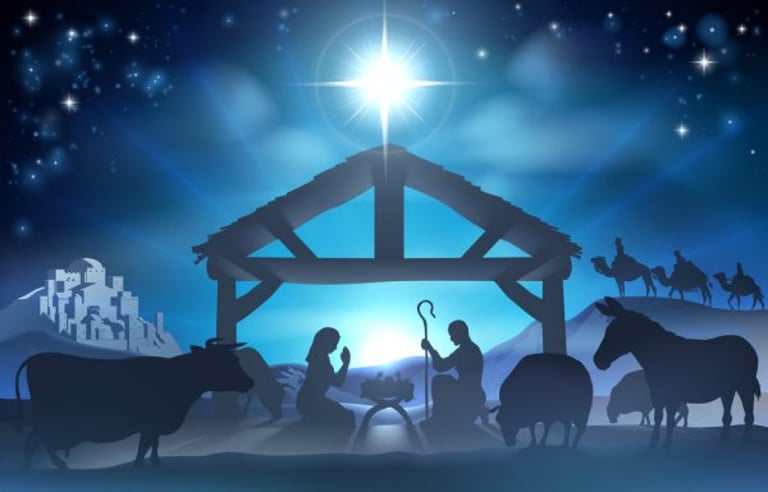
That might mean adding shepherds and sheep one year, the Three Kings and camels another, and eventually villagers, buildings, trees, carts and other details that turn a simple manger scene into a much larger Bethlehem-inspired display.
Building gradually also lets you spread purchases across multiple Christmas seasons instead of buying a large Nativity collection at once.
Fontanini's 5-inch collection is particularly well suited to this approach. The collection extends well beyond the Holy Family to shepherds, Kings, animals, villagers, buildings and small landscape accessories.
The important part is having a plan. You do not need every piece, and a larger collection is not automatically a better Nativity. Start with the part of the Christmas story that matters most to you and give your scene room to grow.
Table of Contents
Choose Your Fontanini Scale Before You Start
Stage 1: Start With the Holy Family
Stage 2: Add the Traditional Nativity Figures
Stage 3: Create a Journey Toward Bethlehem
Stage 4: Add Villagers, Animals and Everyday Life
Stage 5: Expand From a Nativity Into a Bethlehem-Inspired Village
How to Add Pieces Without Making the Display Look Crowded
What Should You Add Next?
Can You Mix Fontanini With Other Nativity Figures?
Is It Better to Buy a Large Set or Build Your Fontanini Collection Slowly?
A Nativity Collection Can Grow With Your Family
Frequently Asked Questions
Continue Reading
Choose Your Fontanini Scale Before You Start
Before buying individual figures, decide which Fontanini scale you want to collect.
This matters because Fontanini has produced figures in multiple sizes. If you begin buying pieces simply because you like them, you can end up with figures that do not look proportional when displayed together.
For someone whose goal is an expandable collection, the 5-inch Fontanini collection offers an especially broad range of choices. The assortment extends from the Holy Family and traditional Nativity figures to animals, villagers, buildings and landscape accessories.
Already have some Nativity pieces? Before ordering additions, use our Nativity Figure Sizes and Scale: How to Match New Figures, Animals, Stables and Accessories guide to measure your existing figures and avoid additions that look noticeably too large or small.
Once you choose a scale, try to remain consistent as the display grows. That one decision makes future additions much easier.


Stage 1: Start With the Holy Family
Every Nativity has a natural center: Mary, Joseph and Baby Jesus.
That means a small Holy Family set can be a perfectly reasonable place to begin. You do not need shepherds, Kings, villagers and a complete Bethlehem landscape during your first Christmas.
A Fontanini 5-Inch Starter Nativity Set with the Holy Family and Stable provides the foundation for the display. It is the clearest example of the start-small approach: establish the manger first and decide later which parts of the scene you want to develop.
There is also a middle ground. A Fontanini 5-Inch Seven-Piece Centennial Nativity Set gives you a larger starting collection without jumping immediately to one of the much more complete sets.
Think about how you want to collect.
If the fun for you will be choosing individual additions over many Christmases, starting small makes sense. If you already know you want more of the traditional Nativity from the beginning, starting with additional figures can get you there sooner while still leaving plenty of room for future expansion.


Stage 2: Add the Traditional Nativity Figures
Once the Holy Family is established, build outward from the manger.
A Fontanini Good Shepherd with Sheep is a natural early addition. Additional sheep can turn one shepherd into a small pastoral scene rather than simply another figure standing beside the stable.
An angel can add height and another important element of the Christmas story.
The Fontanini Three-Piece Three Kings Set creates another distinct group. Rather than crowding the Kings immediately around the manger, consider placing them farther away and letting their position suggest a journey toward the Holy Family. If you're adding Magi to a collection that did not originally include them, How to Add Wise Men to an Existing Nativity Scene explains how to match their scale, proportions and style before building out the procession.
Animals provide some of the easiest incremental additions. A Fontanini Seated Camel can accompany the Kings, while a Fontanini Seated Donkey and Fontanini Seated Ox help develop the area around the stable. Sheep can extend a shepherd scene farther into the landscape.
There is no required order. One family might add the Three Kings first, while another might spend several years creating a larger shepherd scene.
That flexibility is one of the advantages of building rather than buying everything at once.


Stage 3: Create a Journey Toward Bethlehem
As your collection grows, stop thinking only about which figure you want next and start thinking about where that figure belongs in the story.
A larger tabletop gives you enough room to create distance.
Keep the Holy Family as the visual destination. Shepherds can approach from one direction while the Kings and their caravan approach from another. Journey figures can be used elsewhere in a larger display.
Small accessories can help establish those areas without requiring another major purchase.
A Fontanini LED Lighted Campfire can help define a shepherd area. A Fontanini Shepherd's Tent or Sheep Shelter can develop that zone further.
A Fontanini King's Tent can create a different visual area for the Magi and their caravan.
Paths, rocks, trees and changes in elevation can connect these groups without packing everyone beside the manger.
Instead of a collection of unrelated figurines, the display begins to tell a story across the available space.


Stage 4: Add Villagers, Animals and Everyday Life
Once the traditional Nativity is established, you can decide whether you want to stop there or begin creating a larger Bethlehem-inspired village scene.
This is where Fontanini offers a very different kind of expansion.
Instead of simply buying another person to stand near the manger, choose a small scene with its own purpose.
A Fontanini Town Well can become a gathering point.
A Fontanini Bakery Shop can begin a marketplace or village street.
A Fontanini Woodcarver Shop can introduce a craftsman's area.
A shepherd's tent, sheep shelter and animals can create countryside beyond the village.
These are best understood as display storytelling, not as proof that every individual Fontanini accessory represents a historically authenticated reconstruction of Bethlehem around 1 BC. The pieces can help you create a richer village setting around the Nativity while still allowing the Holy Family to remain the center of the Christmas display.
This approach also gives you a useful question whenever you consider another purchase:
What does this piece add to my scene?
If the answer is “a shepherd's field,” “a village street,” “the Kings' journey” or “a marketplace,” the addition has a visual purpose.
If you cannot answer the question, you may not need that piece yet.


Stage 5: Expand From a Nativity Into a Bethlehem-Inspired Village
Eventually, the stable does not have to stand alone.
Buildings can create the beginning of a village. Trees and landscape pieces establish boundaries. Wells, shelters and other small accessories connect larger elements together.
A Fontanini Three-Piece Palm Tree Set can add height and landscape around buildings or pathways. A Fontanini Fishing Pond can create another small landscape feature. Shops and other structures can then begin defining the village itself.
At this point, think in zones rather than individual products.
Your display might have the manger as its spiritual and visual center, a shepherds' field on one side, the Kings and camels traveling toward the Nativity, a small village area with shops and a well, and surrounding landscape that creates breathing room between them.
How to Add Pieces Without Making the Display Look Crowded
An expandable collection eventually creates a new problem: you may own more pieces than the display needs.
You do not have to use everything every Christmas.
Give the Holy Family enough open space to remain the focus. Use smaller groups of figures to create separate scenes rather than lining everyone up beside one another.
Vary depth as well as width. Some figures can sit toward the front while buildings and landscape elements create a background.
Also consider rotating secondary pieces. One Christmas might emphasize shepherds and animals. Another could have a more developed village or a longer procession for the Three Kings.
Your collection can grow without your annual display becoming increasingly crowded.
What Should You Add Next?
Look at what your Nativity is missing rather than at what Fontanini happens to sell.
If you own only the Holy Family, your next addition might be a shepherd.
If you already have shepherds, sheep, a campfire or shelter can turn individual figures into a recognizable pastoral scene.
If you have the Three Kings, a camel or King's Tent can develop their journey.
If your traditional Nativity is complete, a well, shop or other village piece can be the first step toward a larger setting.
If you already have several village elements, your next purchase might be a building or landscape feature that connects them.
And if you have accumulated many pieces, your best next purchase might be nothing at all. Rearranging what you already own can sometimes improve a display more than adding another figure.
Can You Mix Fontanini With Other Nativity Figures?
You can, but the manufacturer's stated scale is only a starting point.
Two figures sold under similar size descriptions can still differ in body proportions, bases, poses and sculpting style. A seated animal also cannot be compared directly with a standing human figure simply by looking at overall height.
Measure your existing standing adult figures and compare proportions before adding pieces from another collection.
Staying within Fontanini's 5-inch collection makes compatibility easier because the pieces are designed for the same collection, although actual dimensions still vary by figure, pose and type of accessory.
For more help comparing pieces before buying them, see Nativity Figure Sizes and Scale: How to Match New Figures, Animals, Stables and Accessories.
Mixing brands can still work particularly well for background scenery and natural materials, where a slight difference in scale may be much less noticeable than it would be between two people standing side by side.


Is It Better to Buy a Large Set or Build Your Fontanini Collection Slowly?
Fontanini also gives shoppers a way to skip much of the early collecting process.
A Fontanini 11-Piece 5-Inch Nativity Set with Stable includes a much more developed traditional Nativity. The set combines the Holy Family with additional traditional Nativity figures and remains part of the expandable 5-inch collection.
The Fontanini 16-Piece 5-Inch Nativity Set with Italian Stable moves even farther toward a substantial ready-to-display starting collection.
Those sets serve a different buyer from the small starter.
A larger set makes sense if you want the traditional Nativity to look substantially complete during its first Christmas. You can still add village pieces, scenery and secondary scenes later.
Starting small offers something different. You can spread purchases across multiple Christmases, choose additions individually and allow the display to develop around your interests.
One year might add the Kings. Another might introduce a shepherd's field. Later, you may discover that what you most enjoy is creating the surrounding village.
Individual pieces can also become natural Christmas or family gifts because each addition joins an established collection.
The important question isn't simply which approach costs less.
It is whether you want to own a substantially complete Nativity sooner or enjoy building one piece by piece over time.
A Nativity Collection Can Grow With Your Family
A Fontanini collection does not need a predetermined finish line.
For some homes, Mary, Joseph and Baby Jesus in a small stable will always be enough. Others may eventually surround the manger with shepherds, Kings, animals and angels. Dedicated collectors can continue outward into shops, villagers, scenery and an extensive Bethlehem-inspired setting.
That range is precisely what makes the expandable approach appealing.
Start with the Nativity you have room for and the part of the story you most want to tell. Keep the scale consistent, add pieces with a purpose and let the display grow only as far as you want it to.
Frequently Asked Questions
What is a good Fontanini size for building a collection?
The 5-inch Fontanini collection is particularly useful for expansion because the assortment extends well beyond the Holy Family to traditional Nativity figures, animals, buildings and numerous accessories.
Do I need to buy a complete Fontanini Nativity set?
No. A Holy Family starter with stable allows you to begin small and add coordinating pieces later. Larger 7-, 11- and 16-piece sets provide progressively more developed starting points.
What Fontanini figures should I add first?
After the Holy Family, shepherds, sheep, an angel and the Three Kings are logical additions for a traditional Nativity. There is no required sequence, however, so build around the part of the Christmas story you most want to emphasize.
Can a Fontanini Nativity become a whole village?
Yes. The 5-inch assortment includes shops, wells, shelters, villagers, animals, trees and other scenery that can extend a traditional Nativity into a much larger village-style display.
Do all Fontanini figures work together?
No. Fontanini has produced different scales, so the Fontanini name alone does not guarantee that two pieces will look proportional together. Check the scale before purchasing additions.
Do I need to display my entire collection every year?
No. Rotating secondary figures, village scenes and accessories can keep a large collection manageable while allowing the Holy Family to remain the visual focus.
Continue Reading
Nativity Figure Sizes and Scale: How to Match New Figures, Animals, Stables and Accessories
Learn how to measure the figures you already own and choose additional people, animals and structures that look proportional together.
Miniature Nativity Sets: How to Choose the Right Small Set
Explore smaller Nativity displays when your available shelf, tabletop or Christmas decorating space calls for a more compact scene.


“As an affiliate marketer, I earn from qualifying purchases with no added cost to you.”
© 2024. All rights reserved.